Central Air Conditioning Repair and Installation in Minneapolis
Bryn AC & Heating repairs, replaces and installs central air conditioners in Minneapolis and the nearby suburbs, and sizes each new system for the house it will cool.
Repairs on Condensers, Coils and Blowers
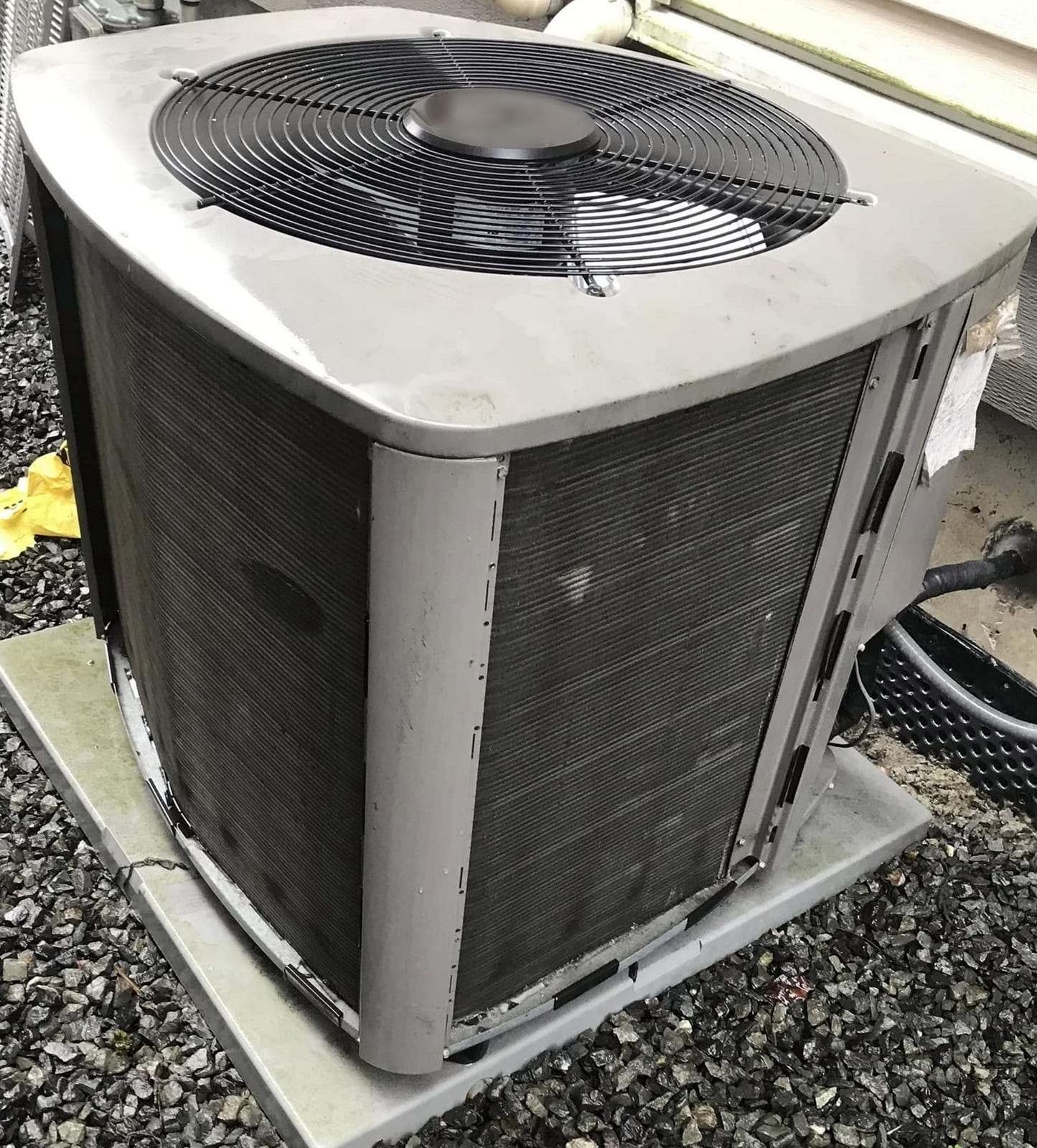
A central air conditioner has two halves that work as a pair: the condenser outside and the evaporator coil indoors, which usually sits on top of the furnace, joined by copper refrigerant lines. The furnace blower pushes the cooled air through the same ducts that carry heat in winter, so a cooling problem can start outdoors, indoors or in the airflow between them.
Bryn AC & Heating repairs central air conditioners, including bad capacitors, refrigerant leaks and noisy blowers. When refrigerant is leaking, the leak itself has to be found and fixed before the system is recharged; adding refrigerant alone only lets the new charge escape again.
Humid summers are hard on a system that is already struggling. An air conditioner takes moisture out of the air as well as heat, and one that is low on refrigerant or short of airflow can leave the house cool but clammy.
| Service | Equipment covered | Common reasons to call |
|---|---|---|
| Air conditioner repair | Outdoor condensers, capacitors, contactors and fan motors | No cooling, a unit that hums but will not start, a fan that does not spin |
| Refrigerant leak repair | Refrigerant lines and the indoor and outdoor coils | Weak cooling, ice on the copper lines, a hissing sound near the coil |
| Blower and airflow repair | Furnace blowers, filters and the ducts that carry cooled air | Weak airflow, a noisy blower, rooms that stay warm |
| Air conditioner replacement | New condensers and matching indoor coils, sized for the house | An aging unit, repeated leaks, a system that falls behind on hot days |
| New central air | Condenser, indoor coil, refrigerant lines and duct changes | A house with a furnace and ducts but no air conditioning |
| Seasonal tune-up | The condenser coil, the indoor coil and the filter | Getting ready for summer, or an outdoor coil caked with dirt |
When an Air Conditioner Stops Keeping Up
Cooling trouble usually builds over days or weeks rather than arriving all at once, and catching it early can keep a small repair from turning into a failed compressor.
| Sign | What it may point to | What to do |
|---|---|---|
| The outdoor unit hums, but the fan does not turn | A failed capacitor or fan motor | Turn the system off at the thermostat and request service; running it this way can overheat the compressor |
| Air from the registers is barely cool | Low refrigerant from a leak, a dirty coil or a clogged filter | Replace the filter; if nothing changes within a day, request service |
| Ice on the copper lines or the indoor coil | Low airflow or low refrigerant | Switch the thermostat from Cool to Off so the ice can melt, then request service |
| Water around the furnace or indoor coil | A blocked condensate drain or a cracked drain pan | Turn the cooling off, wipe up the water and request service |
| The system starts and stops every few minutes | An oversized unit, low refrigerant or a thermostat in a poor spot | Note when it happens and request service |
| Buzzing, grinding or squealing from the outdoor unit | An electrical fault, worn motor bearings or a loose panel | Turn the system off and request service |
| The breaker trips when cooling starts | A failing compressor or capacitor, or a wiring fault | Leave the breaker off and request service rather than resetting it again and again |
Many cooling problems begin with a clogged filter or a dirty coil, and both are looked after in a spring tune-up before the first hot stretch of the year.
How Central Air Is Sized
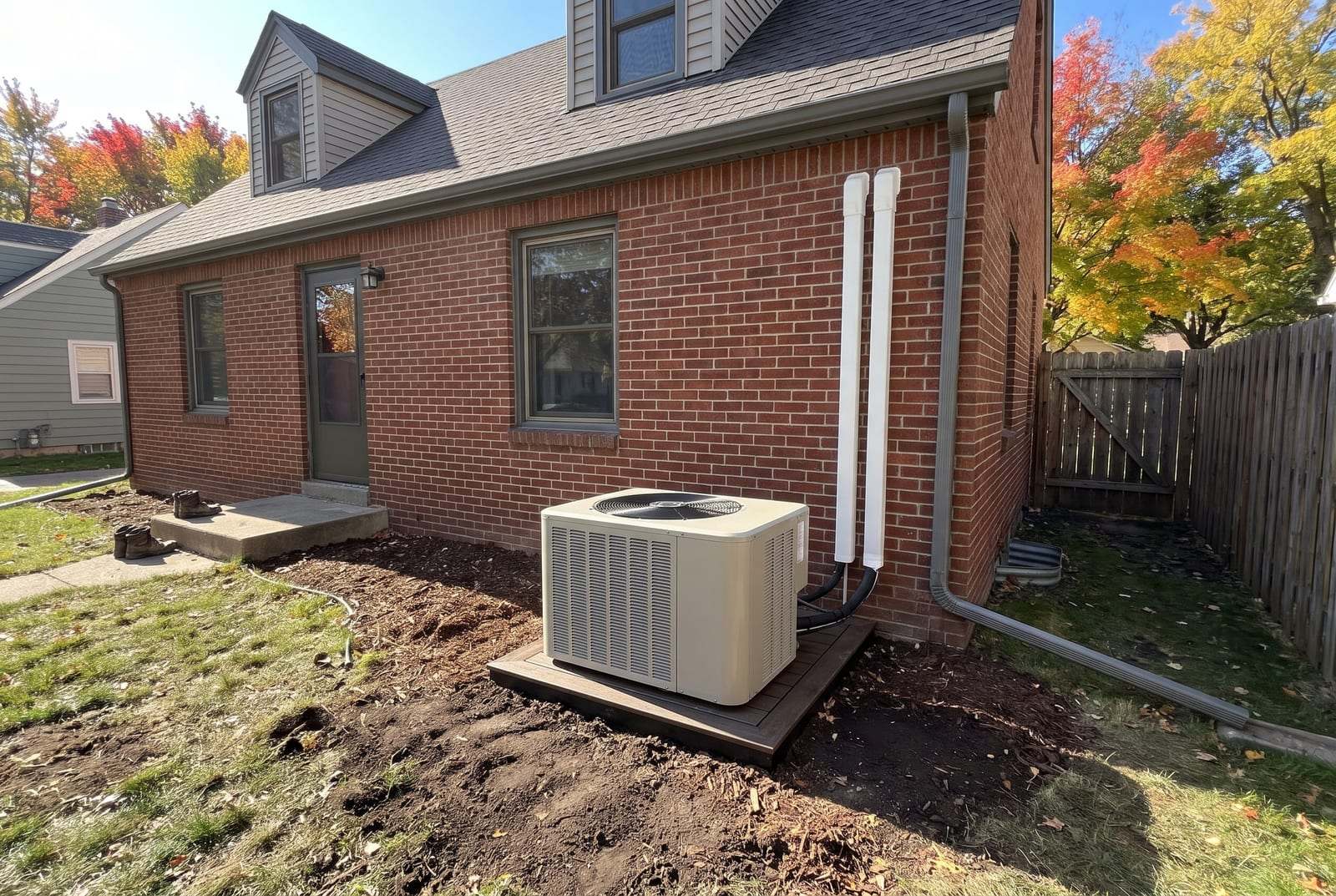
Air conditioners are rated by capacity in tons. One ton of cooling equals 12,000 BTU per hour, and most central air conditioners for houses fall between 1½ and 5 tons.
The right size depends on much more than floor area. A proper load calculation, known in the trade as a Manual J calculation, accounts for the walls and ceiling insulation, the windows and the direction they face, air leaks, the people in the house and the condition of the ductwork. It works out how much heat the house gains on a hot day, and the equipment is chosen to match.
Replacing an old air conditioner is the time to check its size rather than copy it. A house that has gained insulation, new windows or a finished attic since the last unit went in may need a different capacity now.
AC Sizing Guide
Enter the home’s size and the other details, then press “Estimate the Size” for a rough range in tons.
Questions About Oversized Units and Humidity
Why is an oversized air conditioner a problem?
An oversized unit cools the air around the thermostat quickly and shuts off before the rest of the house has evened out. Because it runs in short bursts, it pulls less moisture from the air, starts and stops more often, and tends to leave some rooms warm while others are cold.
A unit matched to the house runs longer, steadier cycles, and those longer cycles are what dry the air on a muggy day.
What is short cycling, and what causes it?
Short cycling means the air conditioner starts and stops every few minutes instead of running steady cycles. An oversized unit is one cause. Others include low refrigerant, a dirty coil, a clogged filter, or a thermostat placed where sunlight or a supply register throws off its reading.
Frequent starts are hard on the compressor, so short cycling is worth having checked rather than living with.
Why does the house feel clammy while the air conditioner is running?
Moisture comes out of the air as it passes over the cold indoor coil, and the water drains away. When the system runs in short bursts, or the blower pushes air across the coil too fast, less moisture comes out and the house feels cool but sticky.
The fix may be as simple as correcting the airflow or the refrigerant charge. At replacement time, a unit sized to the house, or one that can run at a lower speed for longer, takes more moisture out of the air.
Will a bigger air conditioner cool a hot upstairs?
Usually not. If the ducts to the upper floor are too small, or leak into the attic and walls, a larger unit forces more air into the same restricted ducts and adds noise rather than comfort.
Duct changes, balancing the airflow between floors, or a separate system for the upper floor are the usual answers, and they are worth looking at before choosing a bigger condenser.
Cooling Older Houses Heated by Radiators
Central air needs ducts. Many older houses heated by a boiler and radiators have none, and running new ducts through finished walls and ceilings is a large job.
In houses like these, a ductless mini-split is often the practical way to add cooling: a slim indoor unit in each room or zone, connected by a small set of refrigerant lines to an outdoor unit. Most mini-splits are heat pumps, so the same system can also add heat in spring and fall.
Whether the air conditioner needs a repair or the house needs a new system sized to fit it, a short request with a few details about the problem is enough to get started.