Furnace and Boiler Repair and New Furnaces in Minneapolis
Bryn AC & Heating repairs furnaces and boilers, and replaces and installs furnaces, for houses and small buildings in Minneapolis and the suburbs around it, from a single failed part to a new furnace sized for the house.
Furnace Repairs and New Furnaces
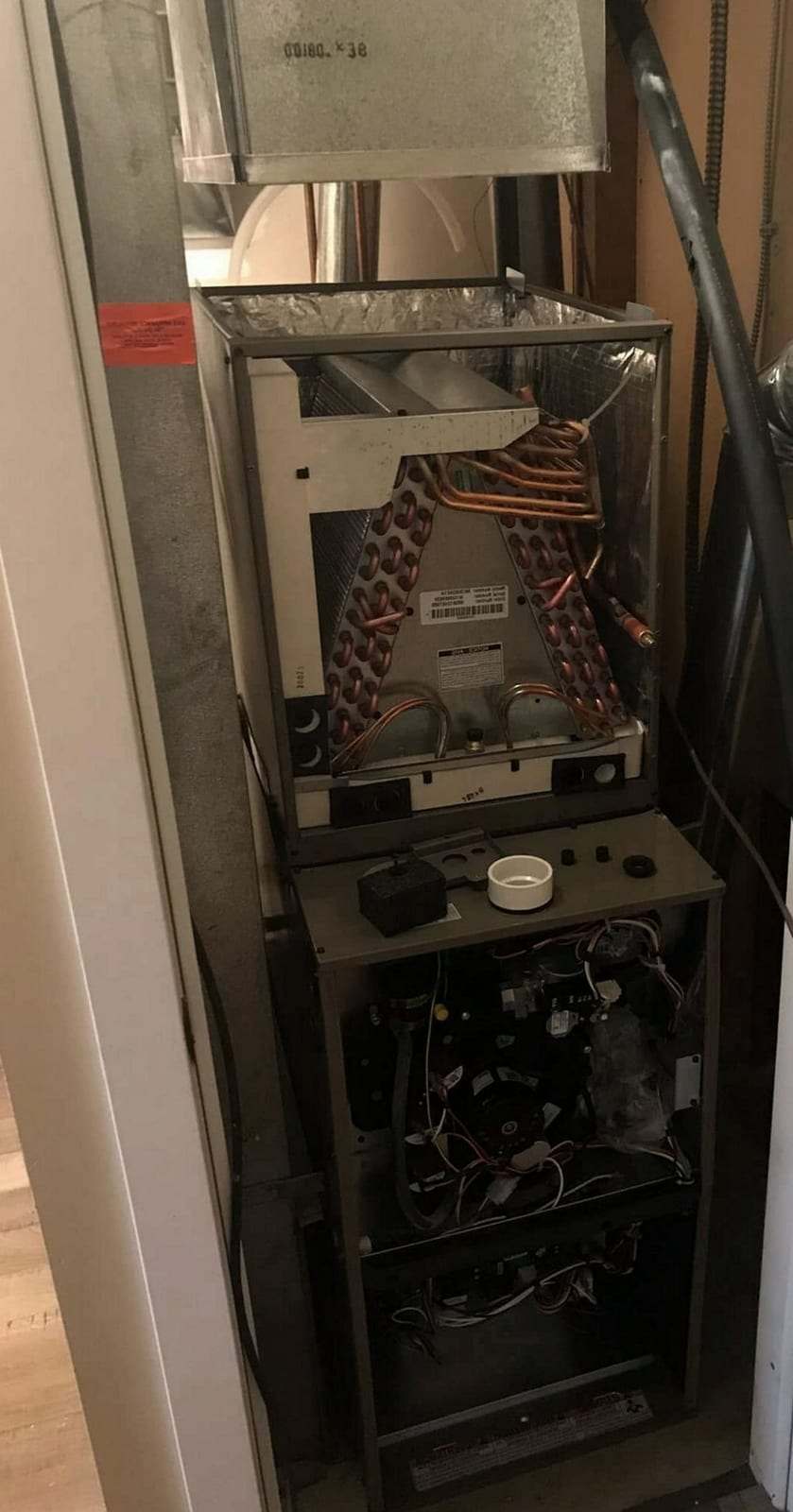
Many furnace repairs come down to one part that has stopped doing its job: an igniter that no longer glows, a flame sensor coated with residue, a worn blower motor or a failed control board. Bryn AC & Heating handles furnace repairs, including no-heat calls, failed igniters and noisy blowers.
When a furnace is replaced, the new one should be sized for the house rather than copied from the old nameplate. Many older furnaces were oversized from the start, and a house that has since gained insulation or newer windows may need less capacity than it once did. An oversized furnace heats in short bursts and wears out sooner; an undersized one runs without a break on the coldest nights and still falls behind.
In older duplexes and bungalows the furnace often sits in a tight closet or a cramped corner of the basement, so the cabinet size, the venting route and the duct connections all shape what will fit. When an older duct layout cannot carry the airflow a new furnace needs, Bryn AC & Heating modifies the ductwork.
| Service | Equipment covered | Common reasons to call |
|---|---|---|
| Furnace repair | Gas furnaces, igniters, flame sensors, blowers and controls | No heat, a furnace that lights and then shuts off, a noisy blower, cool air at the registers |
| Boiler repair | Boilers, circulator pumps, radiators and baseboard | Cold radiators, a boiler that will not fire, banging or gurgling pipes, water near the boiler |
| Furnace replacement | New furnaces sized for the house, with their venting and duct connections | An aging furnace, repeated repairs, a cracked heat exchanger, uneven heat |
| Ductwork changes | Supply and return ducts, trunk lines and registers | Rooms that never warm up, weak airflow, ducts too small for a new furnace |
| Heating safety checks | Heat exchangers, burners, flues and venting | The start of the heating season, a yellow or uneven flame, soot near the furnace |
Boilers and Radiator Heat
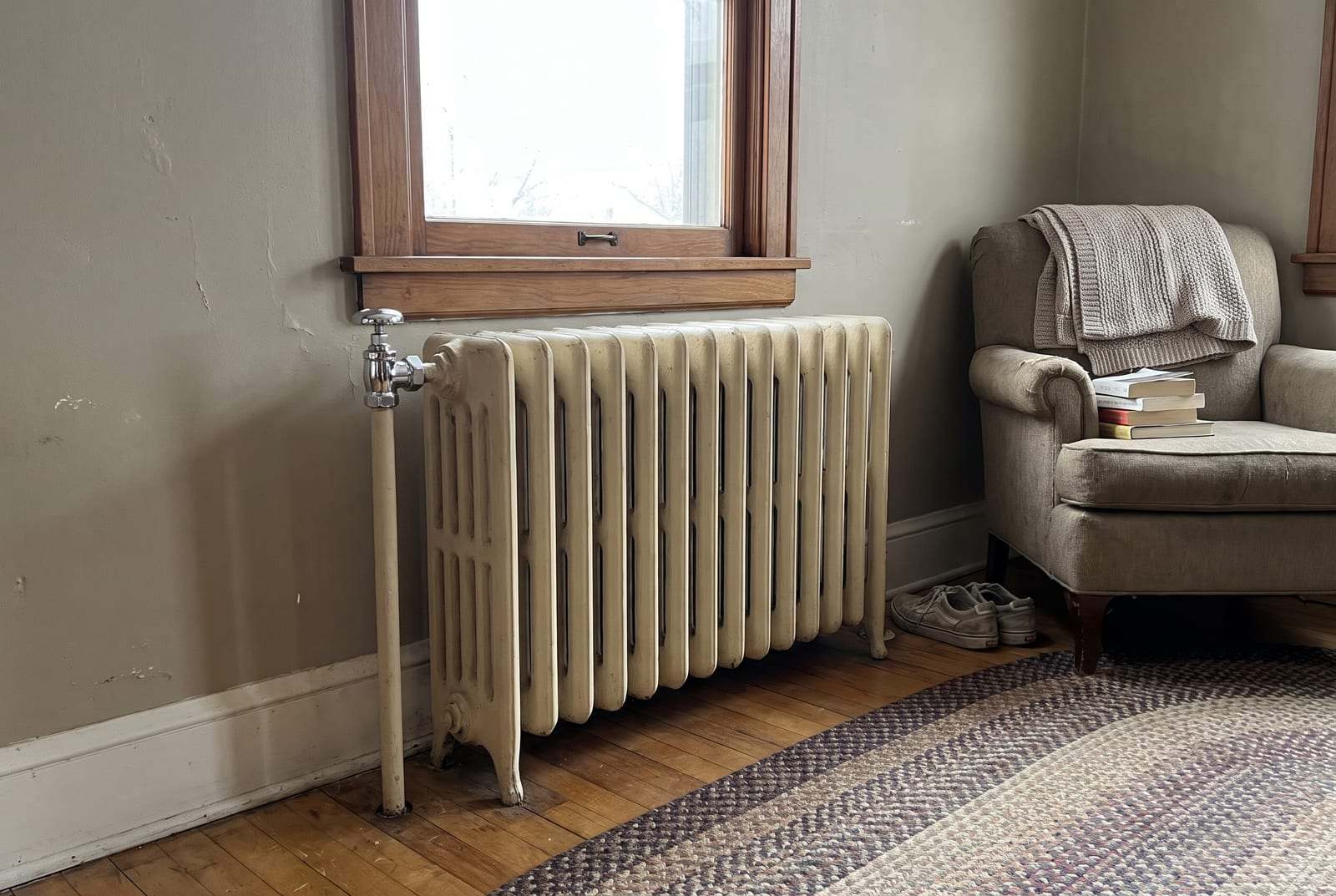
A boiler heats water and pumps it through cast-iron radiators, baseboard or tubing in the floor, so the heat reaches each room without ductwork or a blower. Many older houses still heat this way, and a boiler system in good order gives steady, quiet heat from room to room.
A boiler system has its own parts to watch: the circulator pump that moves the water, the expansion tank that takes up the water’s swelling as it heats, the relief valve that guards against too much pressure, and the controls that fire the burner. When some radiators stay cold while others are hot, or the pipes bang as the heat comes on, the cause is usually one of these parts or air trapped in the pipes.
Boiler repairs often start with the simple causes: air trapped in the radiators, a circulator that has stopped turning, or system pressure that has dropped too low. Many of the parts that wear out on an older boiler can be replaced on their own, which keeps a sound boiler and its radiators working for years.
Signs a Furnace May Be Near Replacement
No single sign means a furnace has to go. When several of these show up together, it is usually time to weigh the cost of keeping the old furnace running against the cost of replacing it.
- The furnace is well past fifteen years old and needs repairs more often than it used to
- Parts are getting hard to find, or one repair would cost a large share of a new furnace
- A technician has found a cracked heat exchanger, which can let combustion gases into the air moving through the house
- The burner flames burn yellow or uneven, or soot collects around the furnace
- Heating bills keep climbing while the house feels no warmer
- The furnace turns on and off every few minutes, or runs without stopping in cold weather
Replacement is also the moment to look at the whole system rather than the furnace alone. A new high-efficiency furnace suits many houses, but some are worth comparing side by side with a heat pump or a dual-fuel system before the decision is made.
Questions About Furnaces, Boilers and Venting
Should an older house with a boiler switch to a furnace?
Usually only when there is a strong reason to add ductwork. A furnace needs supply and return ducts to every room it heats, and fitting them into a house built for radiators means opening walls, ceilings or closets.
Many owners keep the boiler for its even heat and add cooling another way, such as ductless mini-splits, which need no ducts. Where ducts already exist, or the house is being fully renovated, a furnace with central air can make sense.
Is it better to repair an older furnace or replace it?
It depends on the age of the furnace, what failed and what is likely to fail next. Replacing an igniter or a blower motor in a furnace that is otherwise sound is usually worth doing, while a cracked heat exchanger or a string of repairs on an old furnace points toward replacement.
Comfort counts too. If some rooms have never heated evenly, a replacement is the time to correct the sizing and the ductwork rather than repeat the old problem.
Why does a high-efficiency furnace vent through plastic pipe?
A high-efficiency, or condensing, furnace takes so much heat out of its exhaust that the gases leave cool and damp. They are vented through plastic pipe, usually out a side wall or through the roof, and the water that condenses inside the furnace drains away through a small tube to a floor drain or a condensate pump.
Moving the furnace off the chimney can affect a gas water heater that still vents into it. Left alone in a large masonry chimney, a water heater may not draft properly, so the chimney may need a liner or the water heater may need venting of its own. That is worth planning for as part of the furnace replacement.
Heating Trouble and What It May Mean
Heating problems often give some warning before a furnace or boiler stops. A sign does not prove the cause on its own, but it narrows where a technician starts looking, and a few signs call for shutting the system off right away.
| Sign | What it may point to | What to do |
|---|---|---|
| Clicking at start-up, but no flame | A failed igniter or a dirty flame sensor | Turn the thermostat down and request service rather than restarting the furnace again and again |
| The furnace lights, then shuts off within minutes | A clogged filter tripping the high-limit switch, or a flame sensor problem | Replace the filter; if it keeps happening, request service |
| Squealing, rattling or rumbling from the furnace | A worn blower motor or wheel, a loose panel, or burners that light late | Turn the furnace off if the noise is loud or grinding, and request service |
| Yellow, lazy or uneven burner flames | Dirty burners or poor combustion | Request service, and make sure the carbon monoxide alarms are working |
| One floor much warmer than another | The duct layout, closed registers, a dirty filter or an undersized system | Open the registers and change the filter; ask about duct changes if it continues |
| Water around the furnace or boiler | A blocked condensate drain on a high-efficiency furnace, or a leak or dripping relief valve on a boiler | Keep the area dry and request service; leave the valves alone |
| A smell of gas | A possible gas leak | Leave the building, then call 911 and the gas utility from outside |
When the heat stops altogether, a few safe checks come first: the thermostat setting, the breaker, the furnace power switch, the filter, and the outside vent pipes, which drifting snow and ice can block.
Whether the furnace needs one part or the house needs a new heating system, a few lines about what the equipment is doing are a good place to start.