
Seasonal Heating and Cooling Maintenance in Minneapolis
In Minneapolis a furnace can run from October into April and an air conditioner through the muggy weeks of summer. A few minutes of checks each month and a tune-up before each season help both run reliably when they are needed.
What Seasonal Upkeep Involves
Upkeep comes in two parts. The first is a homeowner’s routine: changing filters and keeping the furnace area, the outdoor units and the vent pipes clear of snow, leaves and clutter.
The second is a technician’s tune-up before each season: burner cleaning and safety checks on the heat exchanger and venting before the heating season starts, and coil cleaning and a check of the cooling before summer. A heat pump works in both seasons, so it is generally looked at in spring and again in fall.
Maintenance Calendar
Choose a system type, then press “Show the Calendar” for its tasks month by month.
Who Handles Each Seasonal Task
Most of the routine is quick and needs no tools. The work inside the cabinets, where the burners, the heat exchanger, the coils and the wiring sit, belongs to a technician.
| Season | Heating tasks | Cooling tasks | Homeowner or technician |
|---|---|---|---|
| Fall | Tune-up with burner cleaning and safety checks on the heat exchanger and venting; a new filter; a fresh humidifier pad | Leaves and clippings cleared from the outdoor unit | Tune-up: technician. The rest: homeowner |
| Winter | Filter checked monthly; vent pipes kept clear of snow; humidity lowered as it gets colder | Snow and falling ice kept off the outdoor unit; a heat pump kept clear so it can run and defrost | Homeowner, with a technician for ice or venting problems that return |
| Spring | Filter changed at the end of the heating season; humidifier off for the summer | Tune-up with coil cleaning before the first hot spell; debris cleared away | Tune-up: technician. The rest: homeowner |
| Summer | Storage and chemicals kept away from the furnace or boiler | Filter checked monthly; seed fluff and clippings rinsed off the coil; the condensate drain watched | Homeowner, with a technician for a matted coil or a drain that backs up |
Fall Furnace Readiness
Early fall, before the first cold snap, is the time to get a furnace or boiler ready. The tune-up is a technician’s job; the rest takes a homeowner a few minutes.
- A tune-up with burner cleaning and safety checks on the heat exchanger and venting
- A new filter, its airflow arrow pointing toward the furnace
- A test run on a cool day, with warm air at the registers within a few minutes
- Fresh batteries in the thermostat
- A new humidifier pad, if the furnace has a humidifier
- Registers and return grilles clear of rugs, furniture and curtains
- Paint, cleaners and stored boxes moved away from the furnace or boiler
- Outside vent pipes clear of leaves and nests
- On a boiler, a note of where the pressure gauge sits, so a later change is easy to spot
Winter Care for Filters, Humidity and Vents
Through the heating season, look at the filter once a month. A clogged filter starves the furnace of air until a safety switch shuts the burners off.
Dry indoor air is the next concern. A furnace humidifier helps, but the colder it is outside, the lower the indoor humidity should be.
Snow is the third. High-efficiency furnaces and many boilers vent through plastic pipes on an outside wall, and a drift or a cap of ice can block them and leave the house with no heat. Check them after each heavy snowfall, along with the outdoor unit of a heat pump.
Questions About Filters, Winter Humidity and Snow
How often should the furnace filter be changed?
A standard one-inch filter is often changed every one to three months, and a four- or five-inch media filter every six months to a year. Pets, renovation dust or a system that runs most of the year shorten those intervals.
The simplest habit is to look at it monthly and change it when it looks gray.
What indoor humidity is right in a Minnesota winter?
Lower than many people expect. Common cold-climate guidance is about 30 to 40 percent in milder winter weather, dropping toward 20 percent or less in a deep cold snap.
Frost or water on the inside of the windows means the air holds more moisture than the cold glass can take. Turn the humidifier down until it clears, and run the bathroom and kitchen fans.
Do the vent pipes outside need to be cleared of snow?
Yes, if the furnace or boiler vents through plastic pipes on an outside wall. A blocked pipe trips a safety switch that stops the burners, and the house cools until the pipe is cleared.
Brush snow and ice off the openings by hand after a storm, keep snowbanks away from them, and never cover the pipes to keep snow out.
Should the outdoor air conditioner be covered for winter?
It does not need a cover. A wrap that reaches the ground can trap moisture and shelter mice; if falling ice is a concern, cover the top alone.
A heat pump runs all winter, so its outdoor unit stays uncovered, with snow kept away from its sides and base.
Spring Air Conditioner Readiness
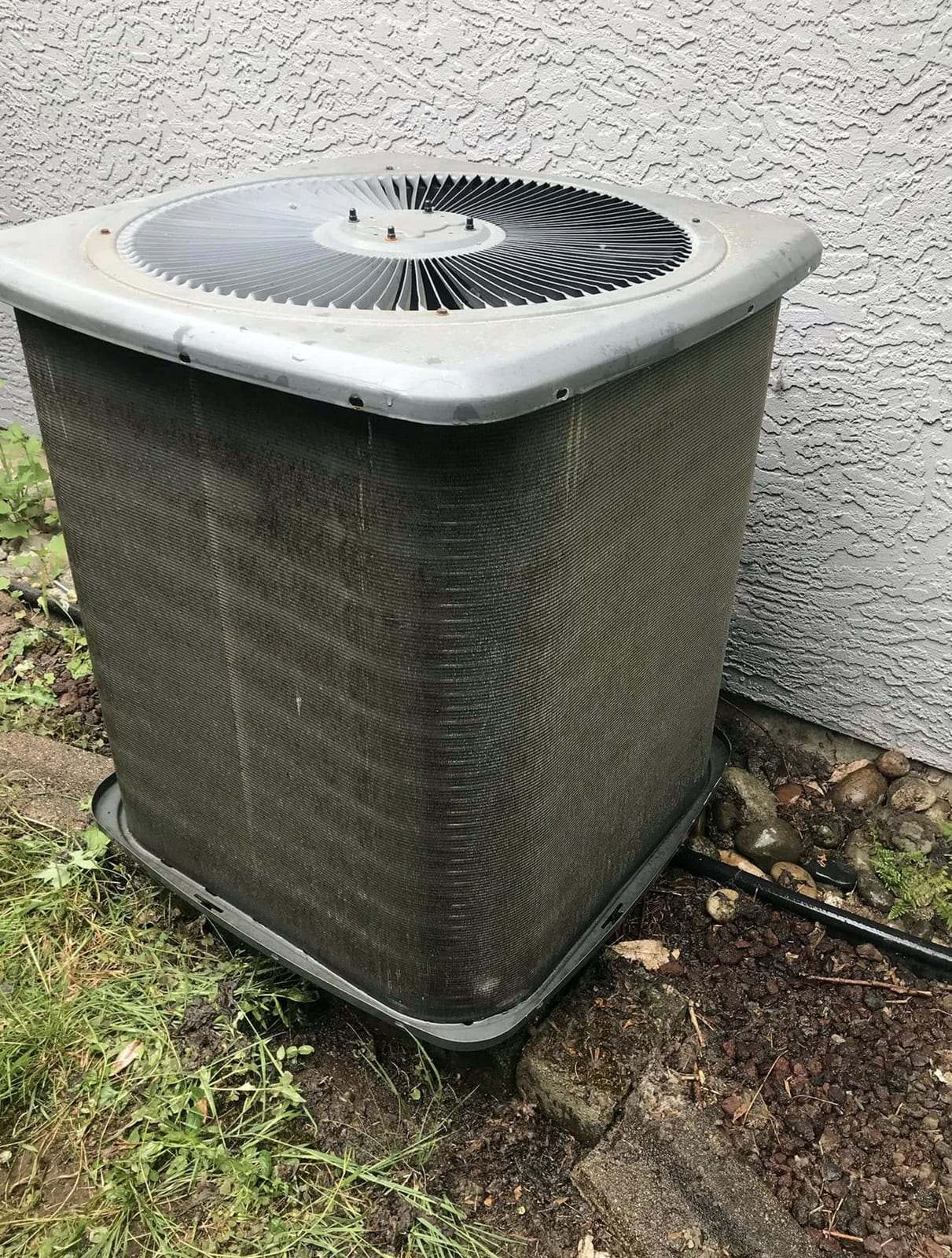
Spring, before the first warm stretch, is the time to get the air conditioner ready. The coil cleaning belongs to the tune-up; the outdoor checks are quick.
- A tune-up with coil cleaning, before the first hot spell
- A new filter for the cooling season
- Any winter cover taken off the outdoor unit
- Leaves and debris cleared, and plants trimmed back so air moves freely around the unit
- The unit level on its pad, with the foam insulation on its refrigerant line in place
- The condensate line from the indoor coil draining, with no water pooling near the furnace
- A test run on a warm day: cool air at the registers and the outdoor fan turning
Seed Fluff and Coil Cleaning in Early Summer
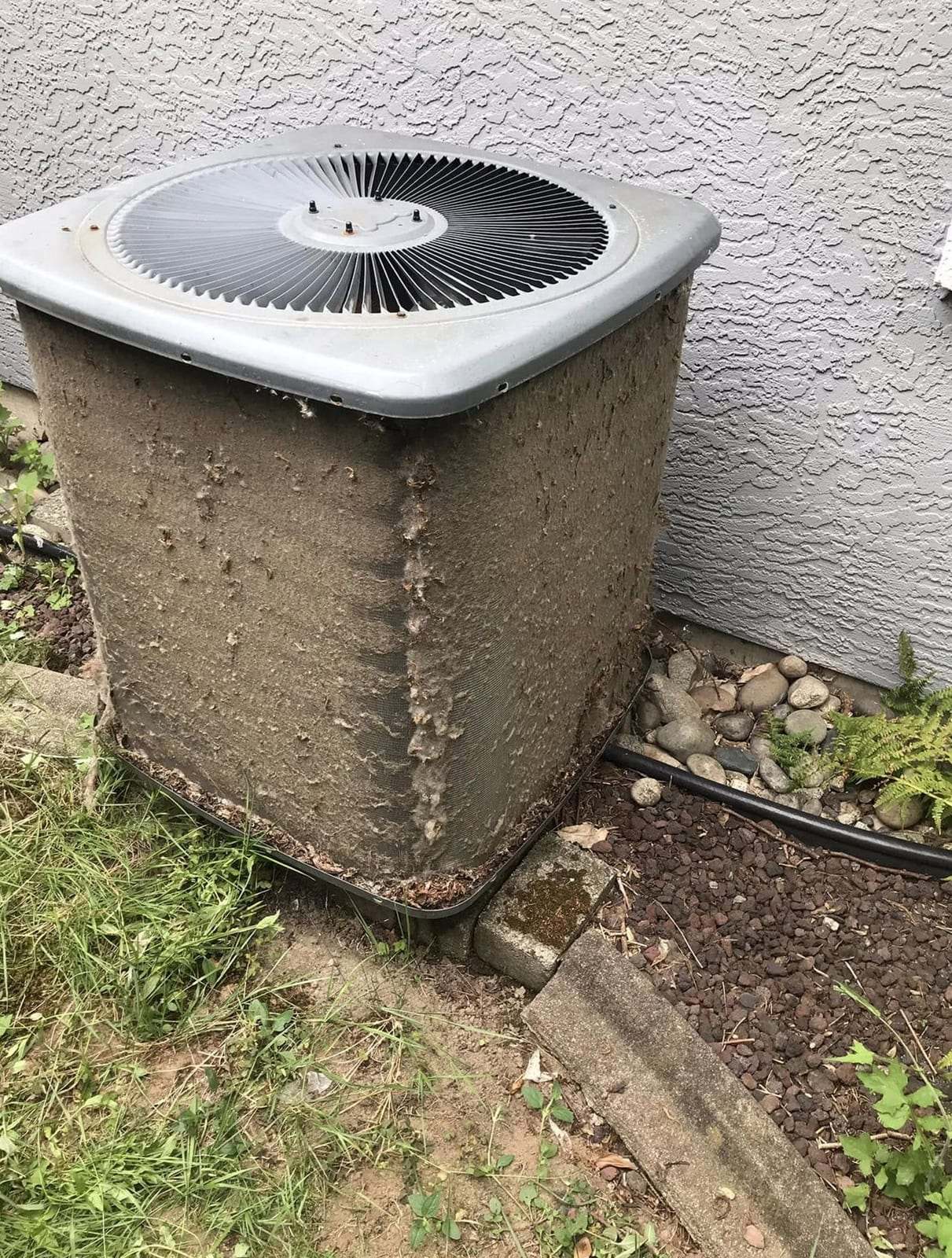
In late spring and early summer, cottonwoods and other trees shed seed fluff that drifts onto the coil of an air conditioner or heat pump. The fan pulls it against the fins, where it mats into a layer that blocks the air the coil needs to shed heat.
A matted coil runs the system longer for less cooling and works the compressor harder in humid weather, which can lead to an air conditioner repair. Light fluff rinses off with a garden hose once the power is off at the breaker or the disconnect box beside the unit. Spray gently, and never use a pressure washer, which bends the fins.
A coil packed tight, or one that still looks dull after rinsing, needs a proper cleaning, which is part of the spring tune-up.
Basement Ductwork and Airflow
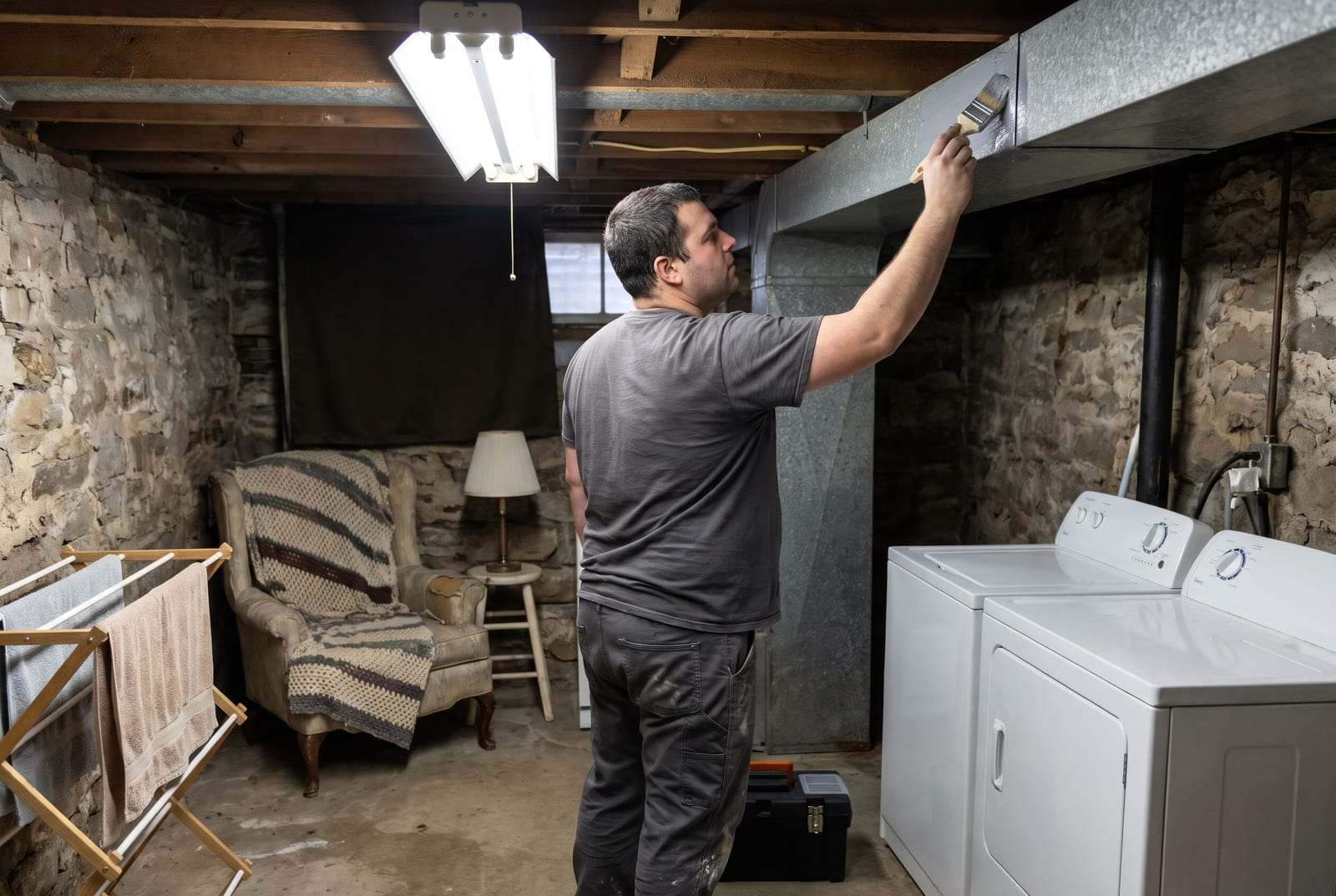
The ducts deserve a look too. In older basements, duct runs have often been extended, patched and taped over the years, and an open seam sends heated or cooled air into the basement instead of upstairs.
Once a year, walk along the exposed ducts and look for gaps at joints, sagging sections and dark streaks of dust around seams, which mark leaks. Sealing seams with duct mastic is ordinary duct work. A layout that cannot carry the airflow a system needs is a bigger change, usually made when the equipment is replaced.
When the next season’s tune-up comes due, send a request with the type of system and its age, if you know it.