Heating and Cooling for Homeowners in Minneapolis
Bryn AC & Heating repairs, replaces and maintains the heating and cooling equipment in houses, duplexes, condos and townhomes. What a home needs depends on when it was built and what has changed in it since.
Equipment by Type of Home
A house built a century ago and one built ten years ago can stand on the same block and need very different work. Older homes often gained ductwork, central air or a newer furnace one owner at a time, while newer homes usually came with equipment designed to share one duct system.
| Home type | Systems commonly found | Common service needs |
|---|---|---|
| Older bungalow | A gas furnace on reworked ductwork, or a hot-water boiler with radiators; central air, if any, added later | Uneven heat between floors, hot upstairs rooms in summer, small return ducts, cooling for rooms the ducts never reached |
| Duplex (up-and-down) | Often a furnace or boiler for each unit in a shared basement; window units or later central air upstairs | Heat and cooling for the upper unit, ducts routed through the lower unit, tight mechanical rooms |
| 1950s rambler | A basement gas furnace with a main trunk and branch ducts; central air often added later to ducts first sized for heating | Furnace and condenser replacement, weak airflow in the cooling season, a cool lower level beside a warm main floor |
| Newer two-story | A high-efficiency gas furnace with plastic vent pipes and central air, sometimes a heat pump or two zones | A warm upstairs in summer, condensate drain and vent pipe problems, coil and filter care |
| Condo or townhome | A furnace or air handler in a closet, a condenser or heat pump on a pad, balcony or roof, sometimes ductless mini-splits | Tight closets, association rules for outdoor units, noise near shared walls, hard-to-reach filters |
Patched Ductwork and Uneven Heat Between Floors
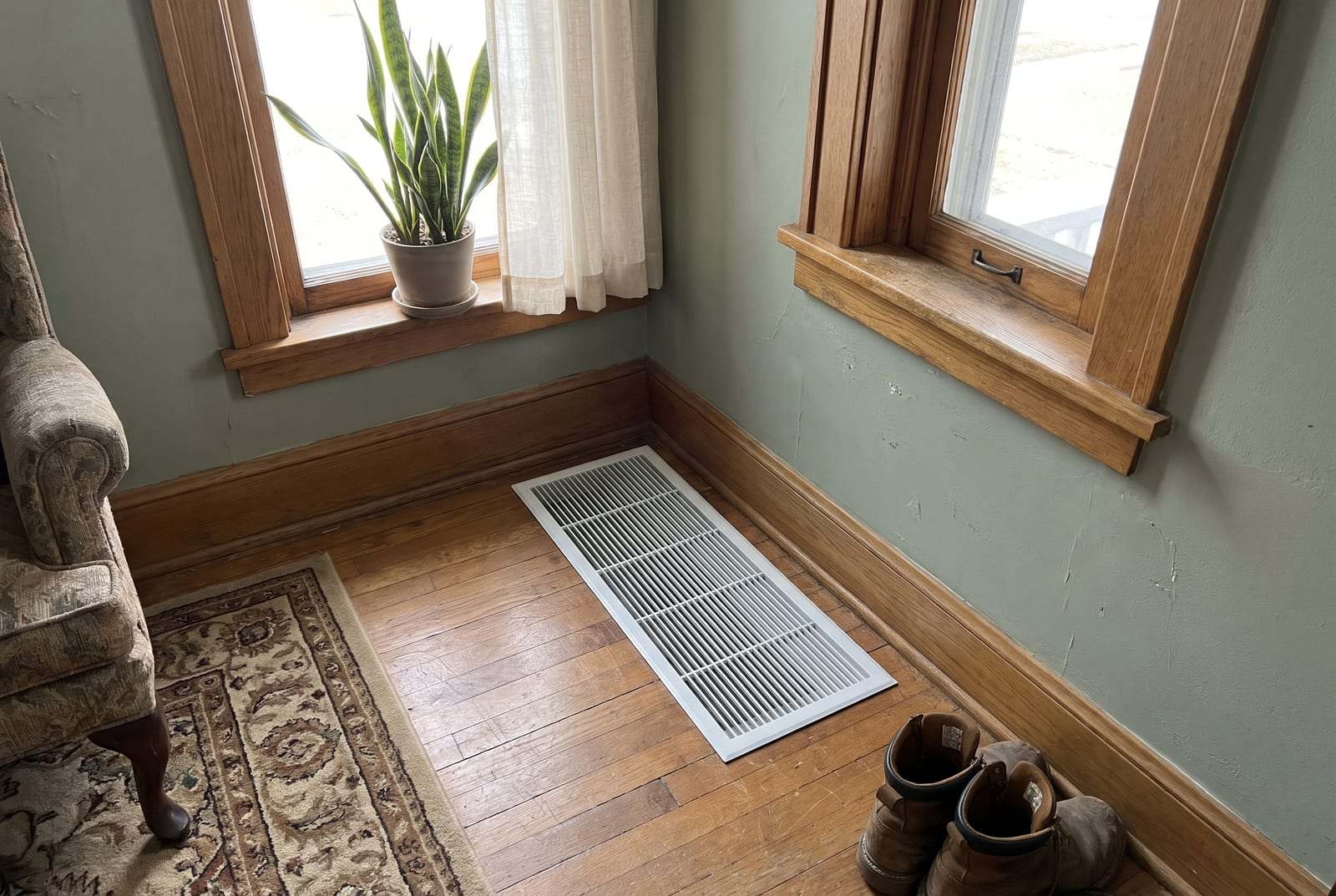
In older bungalows and duplexes, the ductwork has often been patched, extended or rerouted more than once. Supply runs to the upper rooms can be long and leaky, return air may come back through a single grille, and a basement remodel may have cut off runs along the way. The result is a comfortable main floor and bedrooms that run cold in winter and hot in summer.
A technician usually starts by checking how much air reaches each room and how easily it returns to the furnace, since a system cannot push out more air than it draws back in. Sealing leaky joints, adding a return or adjusting dampers can even things out. When an older layout cannot carry the airflow the house needs, Bryn AC & Heating modifies the ductwork.
When to Call a Technician
Any of these is worth a service call before a small fault becomes a larger repair:
- The furnace or boiler runs, but the house never reaches the thermostat setting.
- The system starts and stops every few minutes instead of running steady cycles.
- Air from the registers feels barely cool, or the house stays damp while the air conditioner runs.
- The outdoor unit hums, but its fan does not turn, which often points to a failed capacitor.
- Frost or ice forms on the refrigerant lines in summer.
- Water collects around the furnace, the indoor coil or the boiler.
- The blower squeals, rattles or roars more loudly than it used to.
If the heat has stopped altogether, a few safe first checks for a furnace or boiler can rule out a thermostat or breaker problem. A smell of gas or a sounding carbon monoxide alarm is different: leave the house first, then call 911 and the gas utility from outside.
Repairs, Replacements and Rooms Without Ductwork
Repair work at home covers furnaces, boilers, central air conditioners and heat pumps, from no-heat calls and failed igniters to bad capacitors, refrigerant leaks and noisy blowers. A technician generally confirms the cause before replacing a part, because one symptom, such as a furnace that lights and then shuts off, can have several causes.
When equipment is replaced, Bryn AC & Heating sizes the new furnace, air conditioner or heat pump for the house it is going into. New windows, added insulation or a finished attic change how much heating and cooling a house needs, so the old unit’s size is a weak guide. A replacement usually needs a city permit and an inspection too.
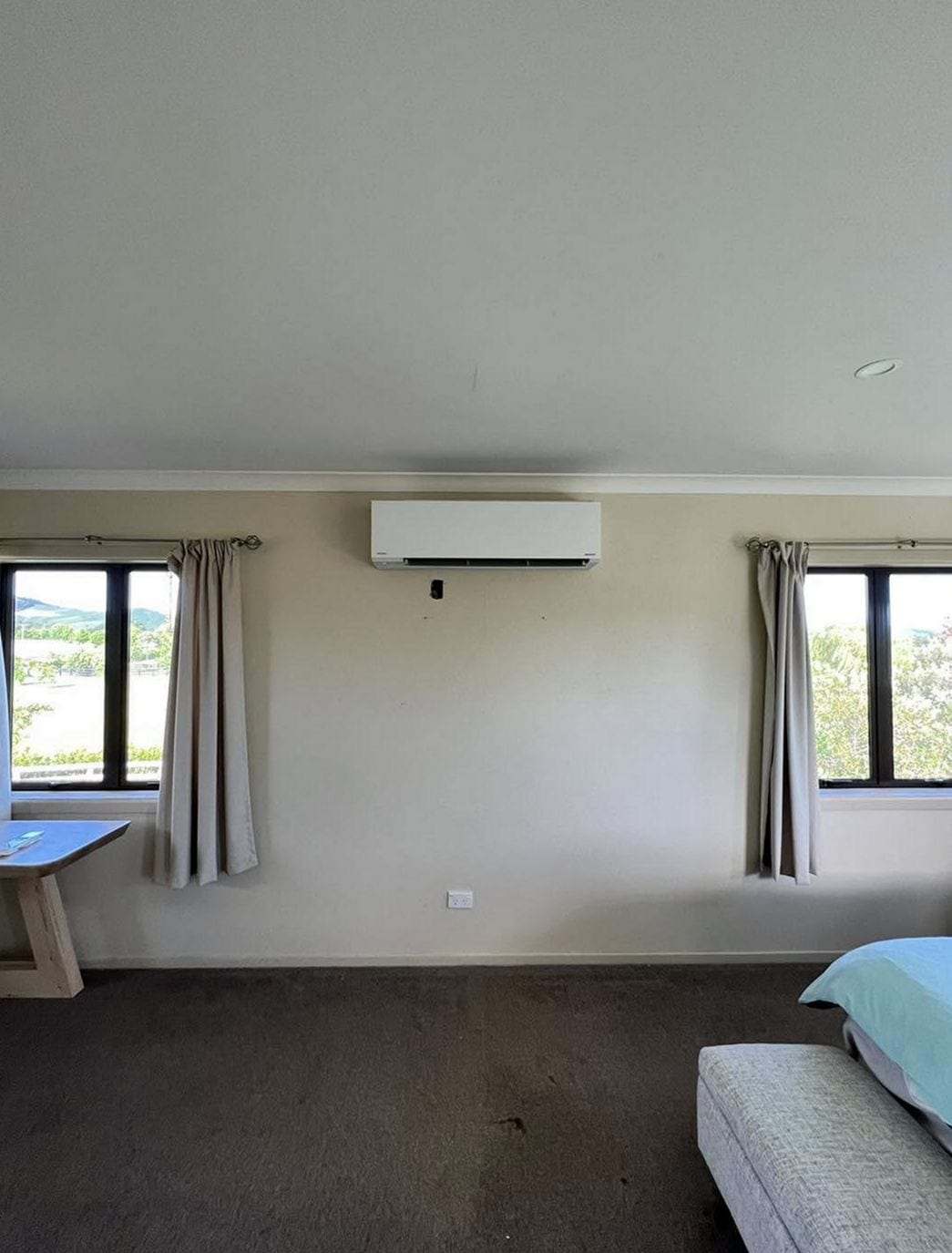
Some rooms were never on the ductwork at all: a converted attic, a sunroom, an addition over the garage. A ductless mini-split, with a slim unit high on the wall and a compact outdoor unit, can heat and cool rooms like these without running new ducts through finished walls and ceilings. Bryn AC & Heating installs mini-splits as well as ducted systems, and one outdoor unit can often serve more than one room.
Between repairs, seasonal maintenance keeps the equipment in working order: tune-ups, burner and coil cleaning, filter changes, and safety checks on the heat exchanger and venting before the heating season starts. In practice, that means looking after the furnace in fall and the air conditioner in spring.
Questions Before Booking a Repair or Replacement
Should the furnace and air conditioner be replaced at the same time?
Not always, but it is worth asking. The indoor coil usually sits on top of the furnace and has to match the outdoor unit, so a new air conditioner often means work at the furnace anyway.
When both are old, replacing them together lets one installation cover the coil, the ductwork connections and the controls, instead of opening up the same area twice.
Should I mention a remodel or an addition?
Yes. A finished basement, a new bedroom, a removed wall, new windows or added insulation all change how much heating and cooling a house needs and where the air has to go.
For a replacement, those changes count for more than the size of the old equipment, which may have been chosen for the house as it used to be.
Do condo and townhome owners need anything extra before booking?
Check the association’s rules first. Associations often decide where an outdoor unit or refrigerant lines may go, and some must approve any change to the outside of the building.
It also helps to know which equipment belongs to your unit and which belongs to the building, and how a technician can reach a closet, a balcony or the roof.
Heating, Cooling and Upkeep at Home
Each kind of equipment comes with its own repairs and replacement choices:
- Furnace and boiler service, from no-heat calls and failed igniters to new furnaces
- Central air conditioning, from bad capacitors and refrigerant leaks to new condensers
- Heat pumps and ductless mini-splits, for heating and cooling from one system
- Seasonal maintenance, for fall furnace and spring air conditioner tune-ups
Whatever the age of the house, a short description of the equipment and what it is doing is the place to start.