Heat Pumps and Ductless Mini-Splits in Minneapolis
A heat pump heats and cools with one system by moving heat rather than burning fuel. Bryn AC & Heating repairs heat pumps, and sizes and installs new heat pumps and ductless mini-split systems for homes in Minneapolis and the nearby suburbs.
How a Heat Pump Heats and Cools
In summer, a heat pump works the way a central air conditioner does: refrigerant picks up heat inside the house and releases it outdoors. In winter, a reversing valve sends the refrigerant the other way, so the outdoor unit draws heat out of the cold air and the indoor unit delivers it to the rooms.
Outdoor air holds usable heat long after it drops below freezing, and cold-climate heat pumps are designed to keep collecting it in far colder weather than older models could.
Because a heat pump moves heat instead of making it, it can deliver more heat energy than the electricity it uses. That advantage is largest in mild weather and narrows as the temperature drops, which is why sizing and backup heat get so much attention in a cold climate.
Ducted, Ductless and Cold-Climate Models
Heat pumps come in a few forms. The right one depends on whether the house has ductwork, how much of the winter heating the heat pump is meant to carry, and which rooms need it most.
| Type | Ducted or ductless | Best suited to | Points to weigh |
|---|---|---|---|
| Ducted air-source heat pump | Ducted | Houses with sound ductwork, often in place of a central air conditioner | The ducts must carry enough airflow, and backup heat is needed for the coldest weather |
| Cold-climate heat pump | Either | Houses that want the heat pump to carry most of the winter heating | Output still drops in deep cold, so it is sized for winter as well as summer |
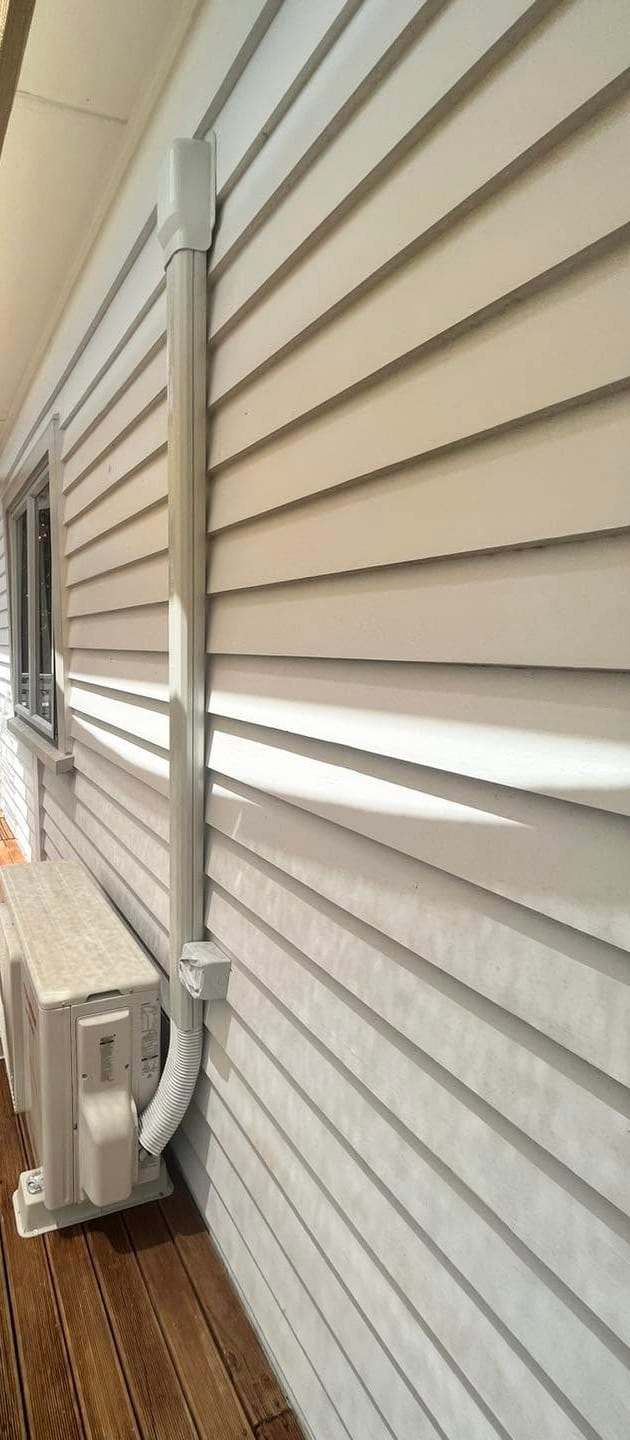
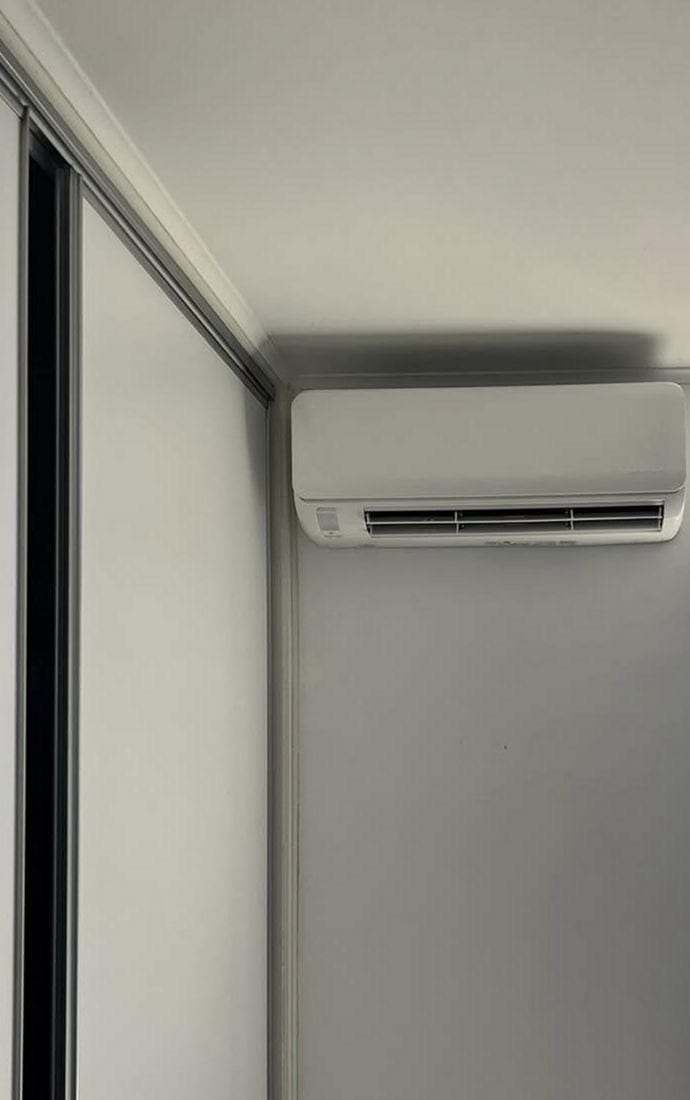
| Wall-mounted mini-split | Ductless | Additions, finished attics, sunrooms and houses heated by boilers | One indoor unit for each room or zone, with refrigerant lines that often run down the outside wall in a cover |
| Floor console mini-split | Ductless | Rooms with knee walls, low windows or little open wall near the ceiling | Takes some floor space, and delivers its heat low in the room |
| Multi-zone mini-split | Ductless | Several rooms served from one outdoor unit | Every zone depends on the one outdoor unit, so a fault there affects them all |
| Dual-fuel system | Ducted | Houses with a gas furnace and ductwork in good condition | Needs controls that hand the heating from the heat pump to the furnace |
Wall-Mounted and Floor Console Mini-Splits
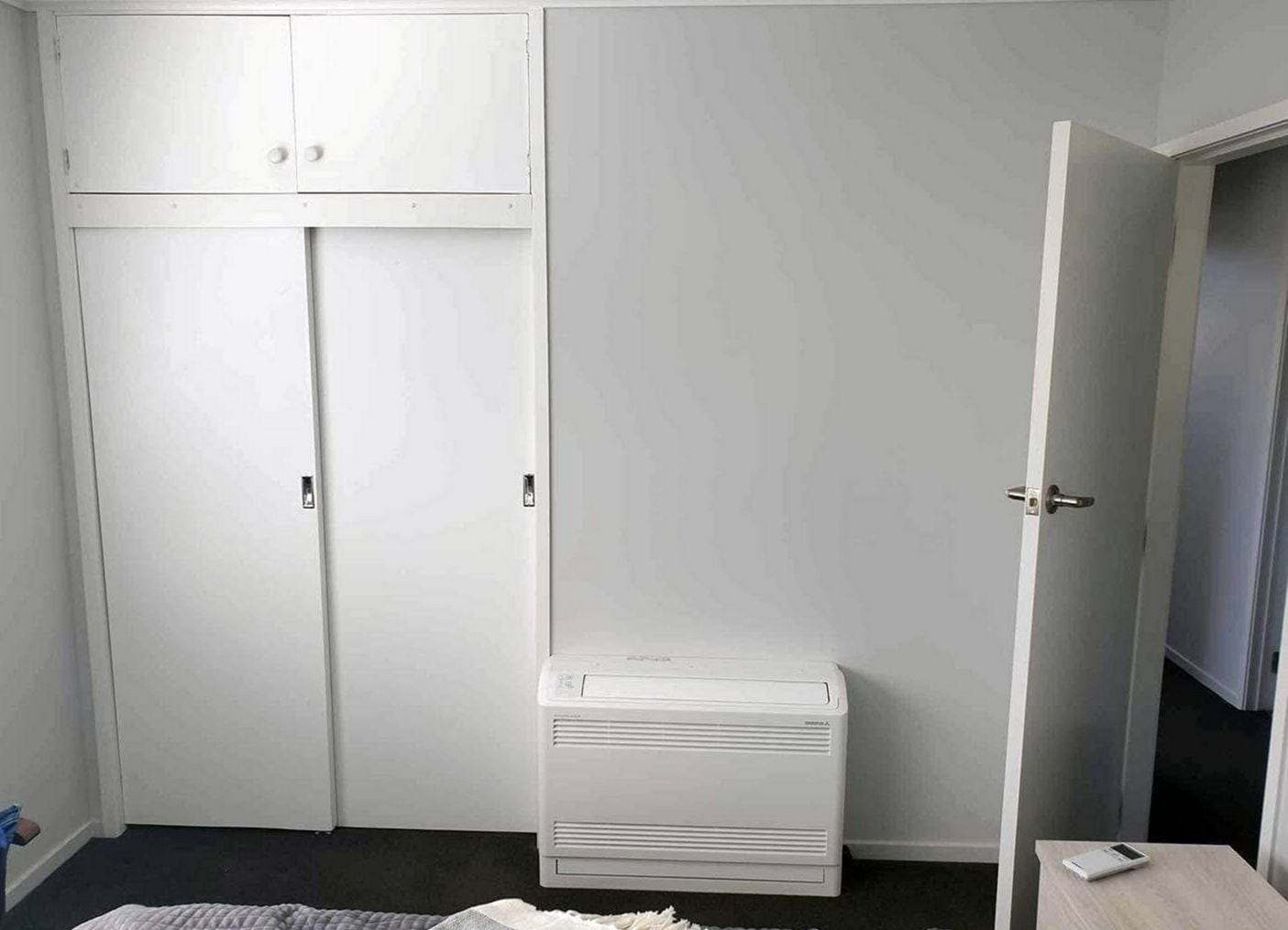
A ductless mini-split puts a small indoor unit in the room itself, high on a wall or low on the floor, and connects it to an outdoor unit through a small opening in the wall. Each indoor unit has its own setting, so a bedroom, an attic room or an addition can be heated or cooled on its own schedule.
Mini-splits suit houses heated by boilers, where there are no ducts to carry cooling, and rooms that were finished or added long after the original heating went in. A floor console fits under a low window or beside a closet where a wall unit would be awkward, and it sends its warm air out near the floor, where it rises through the room.
Dual-Fuel Setups With Furnace Backup
A dual-fuel system pairs a heat pump with a gas furnace on the same ductwork. The heat pump handles the cooling in summer and the heating through the milder part of the year. When the outdoor temperature falls below a set point, the controls hand the heating over to the furnace.
The switch-over point is chosen with the house, the equipment and the local cost of gas and electricity in mind, and it can be changed later. Where winters run well below zero, this lets the heat pump carry most of the load in spring and fall while the furnace covers the coldest weeks.
Dual fuel also suits a house whose furnace has years of life left but whose air conditioner needs replacing. The heat pump takes the air conditioner’s place outdoors, and the furnace stays on as backup.
Questions About Heat Pumps in Winter
Will a heat pump keep the house warm when it is below zero outside?
Many cold-climate heat pumps keep running below zero, but they put out less heat as the air gets colder, just when the house needs the most. Whether one can carry the whole house on the coldest nights depends on its size, the insulation and air sealing of the house, and how the system is set up.
Heat pump systems in cold climates are usually planned with a backup for those nights: a furnace, electric heat strips in the indoor unit, or the heat the house already has.
What kind of backup heat does a heat pump need?
A ducted heat pump is usually paired with a gas furnace, which makes it a dual-fuel system, or with electric heat strips in the air handler. Heat strips are simple but expensive to run for long stretches, so a furnace often makes more sense where gas is already in the house.
A ductless system often keeps the existing heat, such as a boiler or electric baseboard, as its backup for the coldest weather.
Why does the outdoor unit stop and give off steam in winter?
That is usually a defrost cycle. In cold, damp weather, frost builds up on the outdoor coil, and the heat pump briefly reverses to melt it. The fan stops, the unit may hiss or click, and a cloud of steam rises for a few minutes before heating resumes.
A coil that stays iced over for hours, or a unit encased in ice, is a different matter and needs service.
Is My Home a Good Candidate for a Heat Pump?
A heat pump can work in many houses, but some are easier to fit than others. A house is usually a good candidate when several of these are true:
- The central air conditioner is due for replacement, and the ductwork is in good shape
- The furnace still works well and can stay on as backup heat
- Some rooms were never reached by the ductwork, such as an addition, a sunroom or a finished attic
- The house heats with a boiler and radiators and has no ducts for cooling
- The insulation and air sealing are reasonable, or are being improved
- There is room outside for the outdoor unit on a stand or wall bracket, above drifting snow and away from the roof’s drip line
- The electrical panel has room for a new circuit
When the choice is between a heat pump, a new high-efficiency furnace or a dual-fuel pairing of the two, weighing the systems side by side makes the trade-offs easier to see.
If a heat pump or a mini-split might suit the house, send a request that mentions how the house is heated now and which rooms need the most help.